MIT student leaders: Q&A with Johnnie Jones VI, a conversation-starter at Camp Infinite
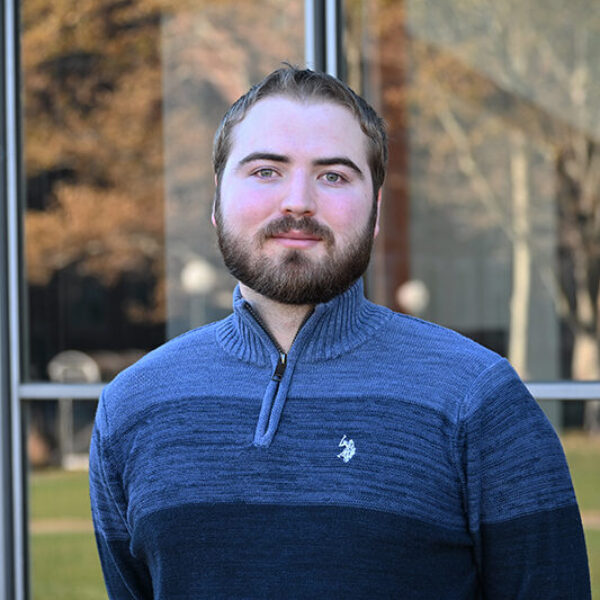


Johnnie Jones VI helps first-year MIT students discover what they want from the Institute—and themselves—during a three-day pre-orientation program.
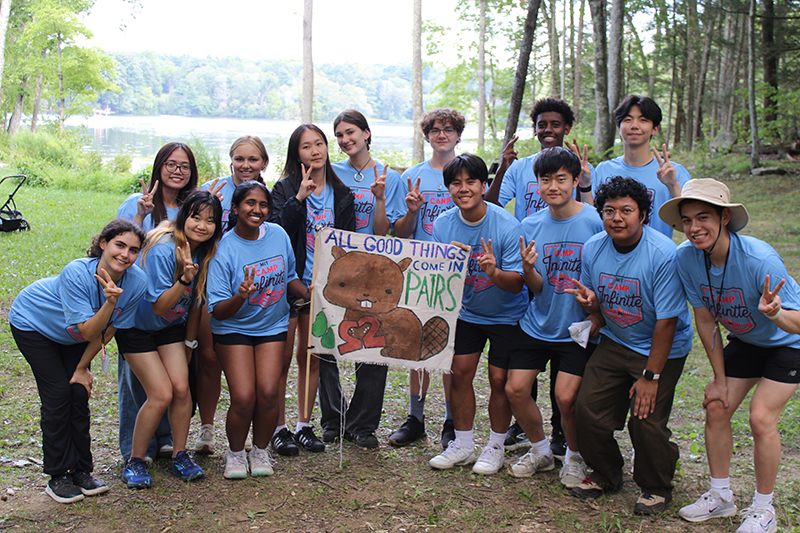
Camp Infinite is an off-campus pre-orientation program that invites incoming MIT undergraduates to pause and reflect before their academic career begins. Rather than introduce the panoply of MIT’s courses of study, research domains, offices, policies, or history, students are guided through candid exercises and collaborative discussions about what they really want to get out of their careers at MIT.
Johnnie Jones VI, a senior mathematics major and Camp Infinite leader, believes an MIT education is about discovery, but not just in the classroom or the lab: “I would argue that your experience at MIT has about half to do with MIT—and everything to do with you.”
Q: What is Camp Infinite?
A: It’s an opportunity, a week before orientation, for first-year students to get an introduction to leadership on campus—not by having them do a ton of leadership activities, but by walking them through three days of self-reflection.
A lot of MIT’s regular orientation activities are major-based: discover material science and engineering, or discover AeroAstro. There are also a few programs that are more personally oriented. Camp Infinite is one of them.
We do icebreakers, team-building activities, and values reflection work. Our real goal is to let students get to know themselves and each other a little better.
Q: What do you mean by “values reflection”?
A: I’ll give you an example. It has an ominous name—“Trash Your Values.”
We ask every student to write down ten personal values, just a word or a short phrase. People put things like family, religion, discipline, excellence, curiosity, community. We don’t apply any prescriptive method, just encourage them to bring things to the surface. Then we then get a big trash bag and ask them to throw away their values one at a time until there’s only one left.
It’s really illuminating. Maybe they see the first thing they wrote wasn’t the most vital, it was actually number two or three—and they can only assess that when the apples and oranges are next to each other. And then, later, after they pitch something, they realize—“Oh, wait…” Getting to one is hard. Is it the most important? Is this one they couldn’t live without?
The goal is to get them to reckon with what it means to have multiple values. What’s really important to you? What does it mean to reconcile values if they come into conflict? And sometimes a value means the same thing to people, and sometimes it doesn’t. We’re interested in the process, in helping them see what they bring to the table.
There can be some really deep cuts, so we do a lot to make sure they feel like they can trust each other and be honest, because sometimes being honest with other people is the first step to being honest with yourself. Plus, it’s collaborative, the way other aspects of the MIT education are.
Q: How does Camp Infinite prepare students for MIT?
A: There’s something paradoxical about it. You might think we need to talk a lot about MIT in order to prepare them for being here. But personally, I would argue that your experience at MIT has about half to do with MIT—and everything to do with you.
We’re really focused on who these people are as they’re showing up. They just finished the four-year marathon of high school, but there’s a lot of psychic energy going on. All of them are excited to be here. Some are more careerist—“What is the right thing to do? What is the correct order to take classes in?” Others are more broadly curious—“What is community life like here? Will I be able to find the groups that mattered a lot to me in high school?”
By giving them time to reflect and ask questions, we want them to see the product of their education isn’t just going to be a degree or a skill set—it’s a person.
Q: How do you talk about your own experience at MIT?
A: I don’t think I’ve ever had a constant understanding of what MIT is. Every year, every semester, every month, I learn something new. As soon as I think I have this thing bound up, it gives me the slip.
That isn’t to say that there isn’t a predominant culture—an “MIT”—and I do try to clue them in to some normal habits of students at MIT—what behaviors tend to emerge, what kinds of values tend to operate here. But it’s always with a caveat: this is my experience; you’re going to go on exploring.
We know this place is a powerhouse in everything technical. We also want to create leaders who know themselves and can talk to each other. We need people who understand these big technical problems, have real expertise, and are willing to work hard—and who are willing to confront the fact that all technology is human technology.
My job is to get them in a state where they’re willing to recognize and wrestle with—and just revel in—MIT.
Have a question about this article?
Contact Sarah Foote from the Division of Student Life’s Communications Office at dsl-comm@mit.edu