Members of MIT’s fraternities, sororities, and independent living groups build community while developing leadership skills
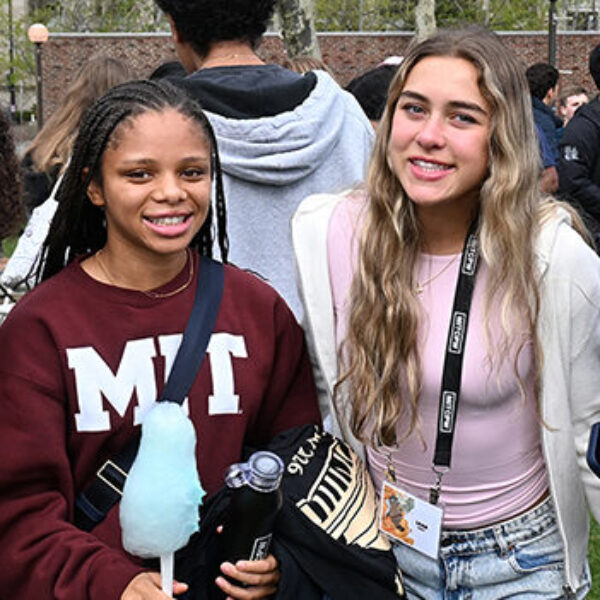


Students make lifelong memories and friendships
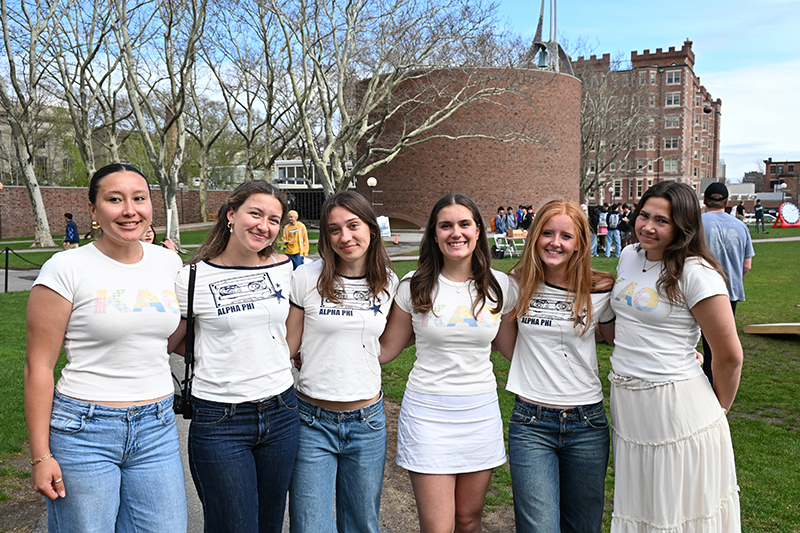
At the beginning of their first year, many MIT undergraduates choose to join one of the Institute’s 44 fraternities, sororities, or independent living groups (FSILGs), some of which are housed across Cambridge, Boston, and Brookline.
There are 30 fraternities, nine sororities, and five independent living groups for students to choose from. Nearly 37 percent of undergrads join an FSILG—communities that offer students more than a place to live, eat, and socialize; they are places where students create friendships, mentor younger students, work with both alumni and MIT administrators, raise funds for local charities, and learn valuable leadership skills.
While each organization has its own set of values, traditions, and membership process, they all share a common goal: creating communities where students can grow both personally and professionally inside and outside of the classroom, while navigating the rigors of an MIT education.
Anya Kattef, ’98, Director of FSILG Alumni Programs, says, “I can’t imagine my MIT experience—or the decades that followed—without the extraordinary community I found in Alpha Phi. Surrounded by smart, compassionate, and driven women, I gained the confidence not only to survive MIT’s demanding academic environment but also to grow as a leader, progressing through the officer roles of Athletic Chair, House Manager, and ultimately President. Beyond the leadership opportunities, the mentorship I received from upperclassmen helped me secure my first summer internship, navigate course selection, and pursue opportunities I might otherwise have overlooked. And perhaps most meaningfully, the friendships I formed through Alpha Phi while at MIT have grown into lifelong bonds that continue to shape and enrich my life.”
Service is a common bond
Associate Dean and Director of FSILGs, Liz Jason, says, “Although every organization is unique and has its own personality, service remains a common thread throughout every fraternity and sorority. Many national organizations partner with causes ranging from heart health research and children’s hospitals to literacy initiatives. Local chapters then build additional partnerships with organizations throughout Greater Boston, supporting causes such as Rosie’s Place, the Boston Area Rape Crisis Center, animal welfare organizations, and other community nonprofits.”
FSILGs often host signature fundraising events tied to philanthropy, while others organize volunteer opportunities throughout the year, such as cleaning up Back Bay alleys, so that it’s woven into the members’ experience.
Jason also notes, “Our culturally based fraternities and sororities place a particularly strong emphasis on community service, with some requiring prospective members to demonstrate volunteer work before joining. In addition, some of our national organizations require students to complete at least one semester of college before joining to ensure they have established academic success first.”
Leadership and responsibility
Presidents and leaders of an FSILG take on a large amount of responsibility that goes beyond the scope of organizing social events or fundraisers. They’re managing organizations that function much like a small business.
“Leaders learn soft skills overseeing budgets, coordinating recruitment, mentoring new members, organizing educational programming, and often spend 10 or more hours each week fulfilling leadership responsibilities,” says Jason. “Leaders also learn conflict resolution while navigating disagreements among members or neighboring residents. They practice delegation, budgeting, prioritization, and time management. They gain experience running meetings, communicating with alumni volunteers, and working with senior Institute leaders. They have a seat at the decision-making table. As a leader, if you expect your peers to do something, you need to model and espouse that behavior too.”
For students living in chapter houses, the responsibilities can extend even further. Leaders learn to manage multimillion-dollar properties. Student leaders coordinate building maintenance, communicate with vendors, oversee safety inspections, organize chores, and help maintain properties that, in some cases, have housed MIT students for more than a century. The student House Manager manages the facility, attends training four times a year, where FSILG leadership goes over seasonal items they need to know, such as removing snow from sidewalks and steps, liability insurance, and safety inspections.
As the Chapter President of Pi Beta Phi, senior Tea Picconatto, says, “My role as President has strengthened my communication, leadership, and conflict-resolution skills. It has also connected me to the broader national organization and provided opportunities to build relationships with members and alumnae across the country. From a professional perspective, the experience has been valuable in demonstrating leadership and responsibility to future employers. I’m certain I was hired for two of my internship roles because of my sorority leadership experience.”
Picconatto adds, “Greek life offers a unique sense of identity, community, and connection to a nationwide network of members and alumnae that continues well after graduation in a way that is not replicated elsewhere on campus. My sorority sisters have always been there to offer emotional support, academic guidance, and encouragement whenever I have needed it.”
At MIT, Alpha Delta Phi Society is a gender-inclusive member of the Institute’s Interfraternity Council. As President, Gabriel Tian, who came to MIT from Toronto, Canada, sought a community to experience MIT with. During the first week of school, he was studying at the ADPhi house library late at night and said it felt very natural and productive, and had the thought, “this is where I belong,” and pledged shortly after. Tian quickly became involved as Academic Chair and Vice President and even helped update the chapter’s website.
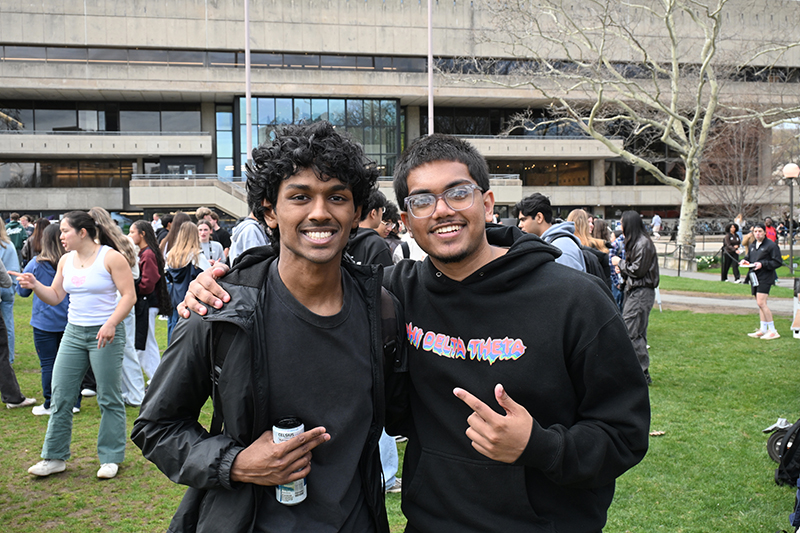
“I have learned so much since Rush − how to be a leader, how to make difficult decisions, how to have hard and personal conversations, how to run a living community with an executive board, how to socialize more effectively to connect with each and every member. Being the President or any other leadership position is tough, but so incredibly valuable and gives me confidence in myself and my ability to care of my community,” says Tian.
Adding, “In just two years since joining, I have made lifelong friends. In fact, some of the closest friendships in my life are right here in the siblinghood. The web of connections my chapter offers really enables connections between people who otherwise would not have the opportunity to have even met at MIT. To me, ADP makes MIT all the more brilliant and special.”
After graduating
Long after graduation, many alumni continue volunteering with their chapters, serving on house corporations, mentoring students, and helping preserve traditions for future generations. For many, the relationships formed during college continue throughout their professional and personal lives.
Some families even span multiple generations of FSILG life, with parents and children joining the same FSILG years apart. Others have found lifelong friendships—or even spouses—through their chapter experience.
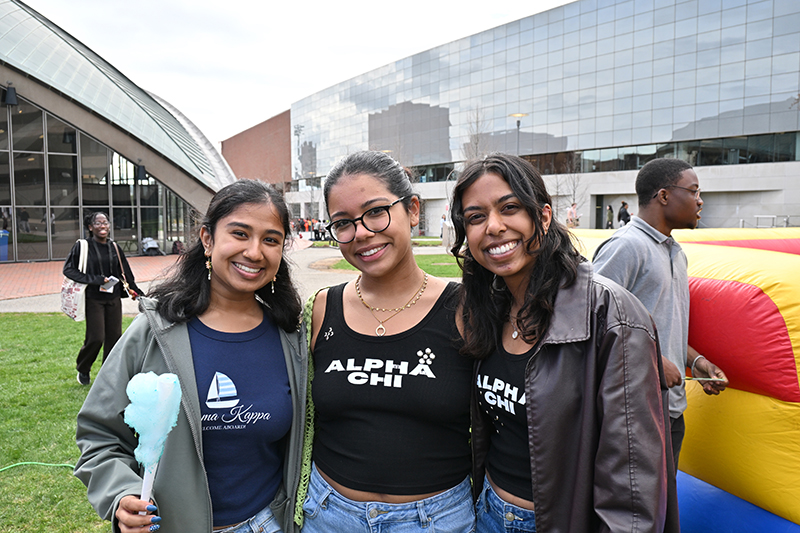
Dr. Cecilia Warpinski Stuopis, ’90, the Chief Health Officer at MIT Health, found that when she joined the Alpha Chi Omega sorority while a student, she had an “instant group of peers.”
“I was trying out for the volleyball team, and my teammate invited me to Rush to see what it was about. We both were invited to join. There were about 20 of us in our pledge class, and perhaps 40 women total in the sorority at the time, and I’m still friends with many of my Alpha Chi sisters to this day. We’re a very tight-knit group. Sororities are a very supportive network of people who care about each other.”
Dr. Stuopis, whose husband also graduated from MIT, adds, “I became reengaged with the community at MIT as an alum, as a volunteer, and then an advisory board member for Alpha Chi Omega. My daughter came to MIT and pledged Alpha Chi too, and this allowed me to attend her initiation. I’ve been on the Board of the Association of Independent Living Groups at MIT for the last nine years and recently signed up for another three. At MIT, fraternities or sororities are not like they are portrayed in the movies. They are guided by friendships, developing bonds, and are there to support all aspects of their member’s success – both during their time as students and well into the future.”
Students interested in joining an FSILG can find more information on the website.
Have a question about this article?
Contact Sarah Foote from the Division of Student Life’s Communications Office at dsl-comm@mit.edu