Can You Escape Next Haunt? A Scary ‘Problem Set’ in the Basement of Next House
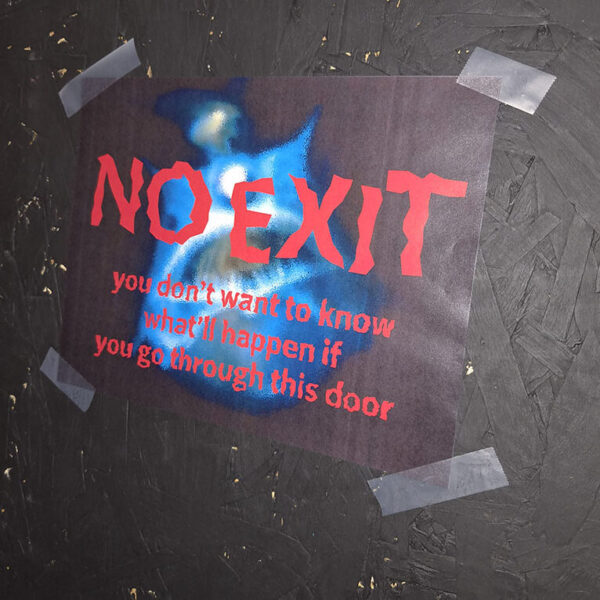


For more than a decade, MIT students have turned Next House’s basement into a spooky test of puzzles, teamwork, and ingenuity.
You know it’s autumn when the scent of pumpkin spice latte begins to waft through the air at the Dunkin’ in the Stratton Student Center, and students in MIT’s Next House residence hall diligently begin to build and piece together the many parts needed to showcase Next Haunt – a combination of a Halloween haunted house and an escape room built in the basement of the hall.
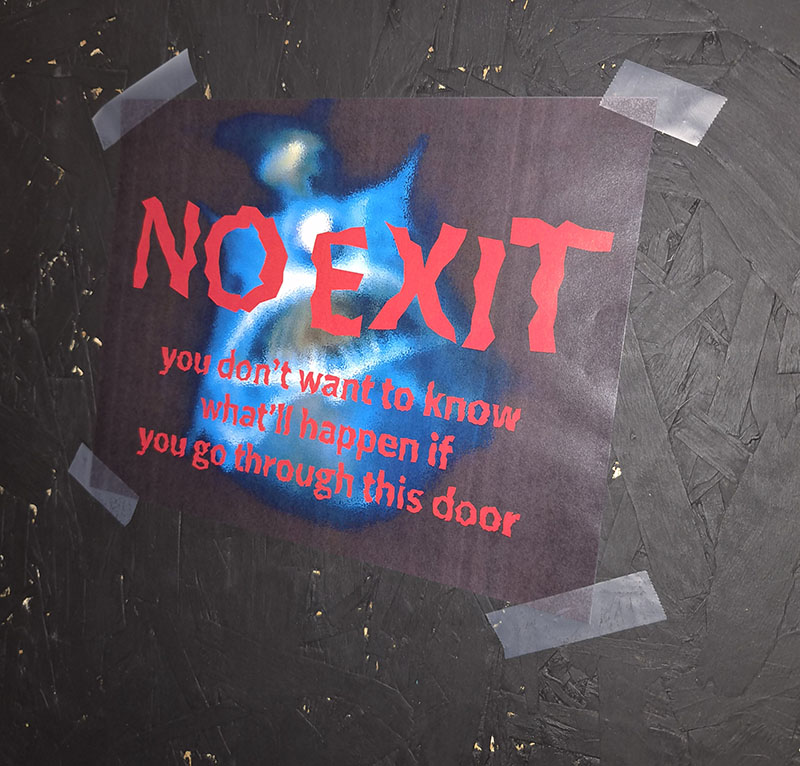
Every fall since 2014, students, also known as hauntmasters, spend several weekends building the room and preparing puzzles, physical tasks, or word challenges to obtain a code to open locks that let participants escape the house. This year’s theme is titled Where the Light Ends, follows Terror Under Destruction, Next Stop: MBTA, and last year’s theme: Get in the HOLE.
Next Haunt is free and open to all MIT students, also known as “test subjects.” Participants should be prepared to spend 20 minutes in small, dark, enclosed rooms, working with four to six teammates to find the clues they need to escape.
Along the way, they have to navigate zombies—played by student actors—who may shout at them or splash them with blood (fake) while they solve the puzzles. If a zombie touches a participant, they become “paralyzed” and can no longer move, but they can still communicate and relay information to their teammates.
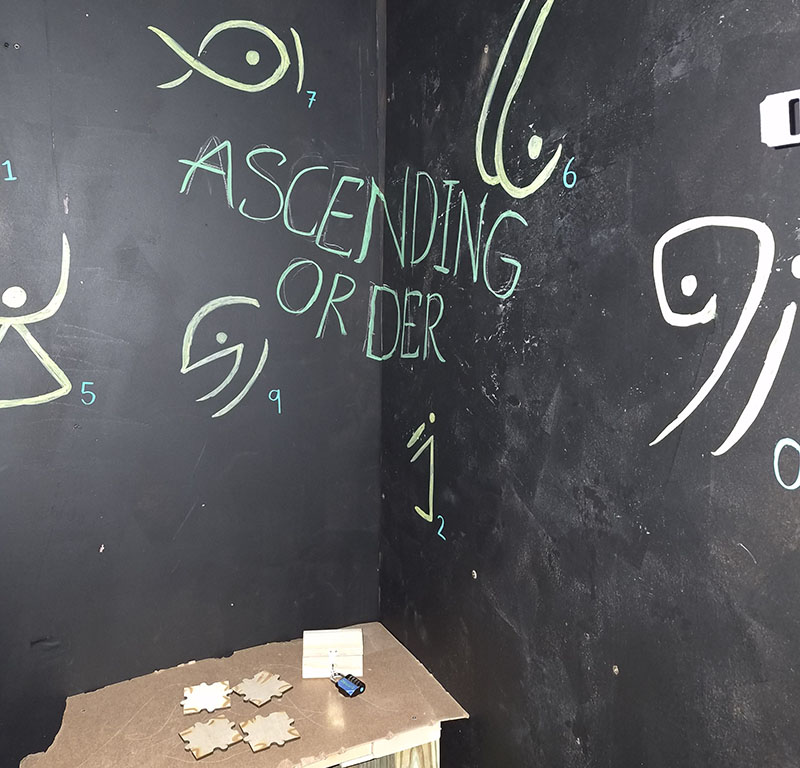
Teams must work closely, strategize, delegate tasks, and communicate effectively as the clock counts down. The group with the quickest escape time gets bragging rights, and every group signs their names on a wooden board to show that they participated.
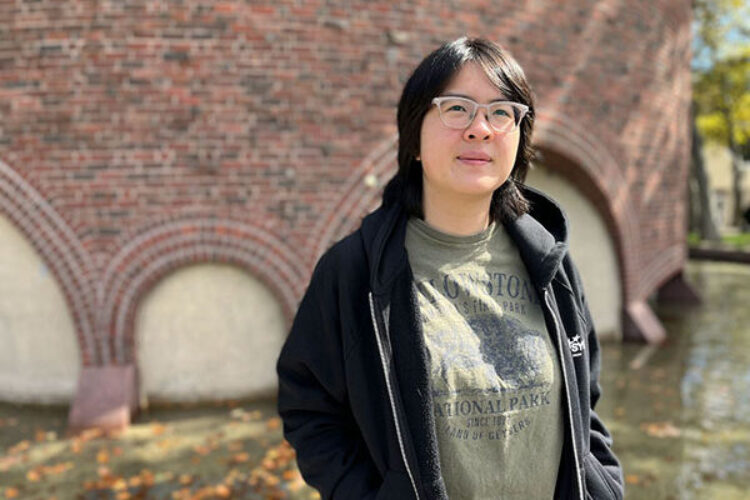
MIT junior Kiyoko Hayano, Next Haunt Co-Producer, says, “I became involved in Next Haunt during my first semester at MIT because I had experience with larger-scale painting. I split the build director’s role with two other freshmen, including Michelle Liang, our current Assistant Producer. I thought this would be a great opportunity to take a break from P-Sets and work with my hands and fell in love with the club.”
Safety First
Before the room is built and the puzzles and costumes are created, careful planning takes place to ensure the escape room is safe, fire-resistant, and passes an on-site inspection. MIT’s Campus Construction and Environment, Health, and Safety offices are involved from the start, and all students who partake in the build are required to attend safety orientation and tool training.
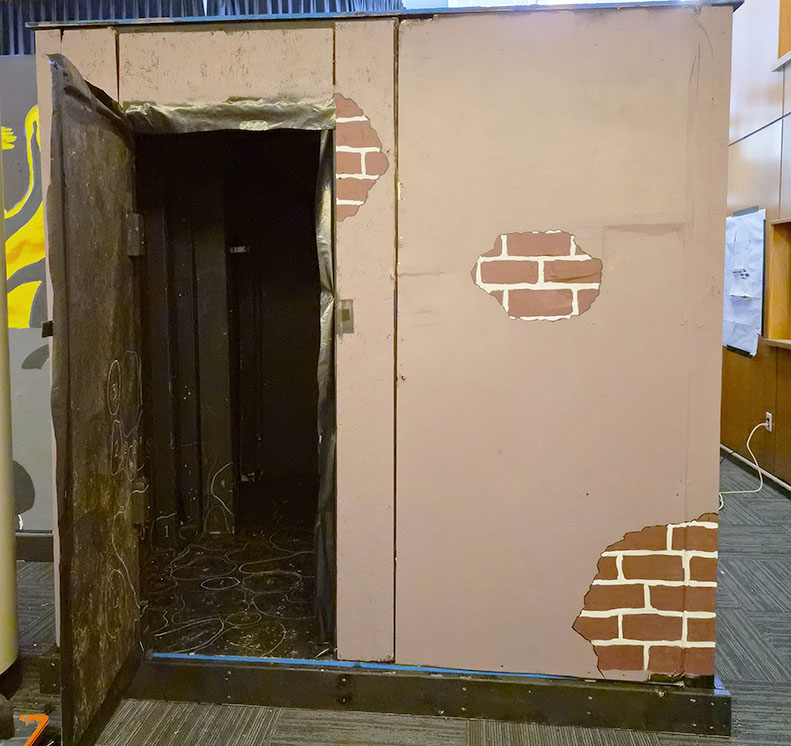
“We currently have 18 people on our executive team, and we have 12 outside volunteers come help over the first few weekends of Next Haunt build,” says Hayano. “We then run Next Haunt for six and a half hours every night for two weekends at the end of October.”
Once the build is complete, several alumni volunteers conduct a “test run” to make sure the puzzles and clues are hard, but not impossible, and anyone who wants to leave the room before the allotted time can easily find the door out built with Velcro closures. It’s not easy, and not all are successful. Last year, only 16% of the 73 teams successfully got out of the room. The winning team escaped in just under 15 minutes.
Alumnus and previous Next Haunt producer Allen Lin notes, “I became involved with Next Haunt in my freshman year after being a test subject myself, and I loved the creative and building process so much I wanted to join. My favorite part was seeing all the teams go through the house, especially on the last day when we hosted past Haunt alumni. It was just as rewarding to see how much our test subjects enjoy the house as it was to share the many laughs and moments of camaraderie among my team. I’m excited to come back as an alum and see what the Next Haunt team built this year!”
“It’s a joy working collaboratively with students and connecting them to campus partners who lend their expertise as the build develops,” says Manager of Special Projects, Housing & Residential Services, Milo Alto. “Students get very creative every year with the theme and costumes, but they also learn valuable leadership skills along the way—time management, delegation, working with peers, and implementation of a detailed plan. It’s also a great way to build community.”
Environmentally Mindful
At the end of Next Haunt, the escape room is dismantled, and anything that can be repurposed safely is stored for the following year’s build. The executive crew then goes to a Boston-area escape room to celebrate their hard work.
Students interested in planning and working on the 2027 build can sign up here.
This year’s spooky production staff includes: Producers: Kiyoko Hayano and Charlie Bruel; Assistant Producer: Michelle Liang; Build Director: Ali Prisecaru; Art Director: Jordyn Goldson; Assistant Build Director: Coleman DuPlessie; Puzzle Leads: Jay Bhan; Puzzle Team: Dominic Perno, Lucy Anderson, Sharon Li, and Samuel Xu; Sound Designer: Nico Sbrocca; Costume Designer: Katiah Jimenez; and Art Crew: Daph Guo and Anabelle Ahteck.
Have a question about this article?
Contact Sarah Foote from the Division of Student Life’s Communications Office at dsl-comm@mit.edu