Event Spaces
From large auditoriums to intimate conference rooms, the Campus Activities Complex (CAC) manages event space across the MIT campus.
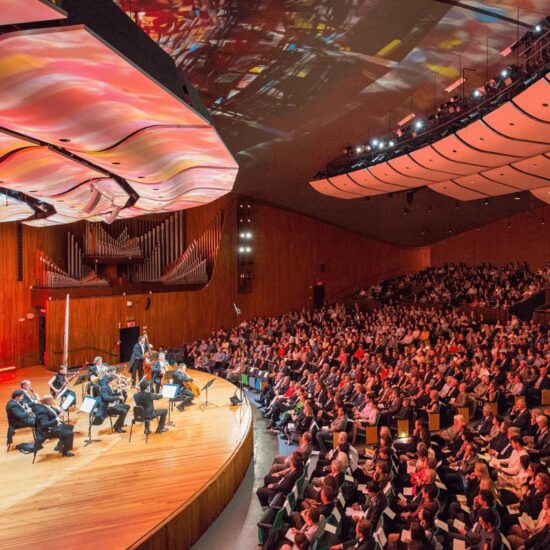
CAC Spaces
The Campus Activities Complex is one of a number of space and event support offices on campus. The Office of Institute Events hosts a comprehensive list of on-campus event space options and maintains a list of recommended off-campus venues.
Kresge Auditorium (W16)
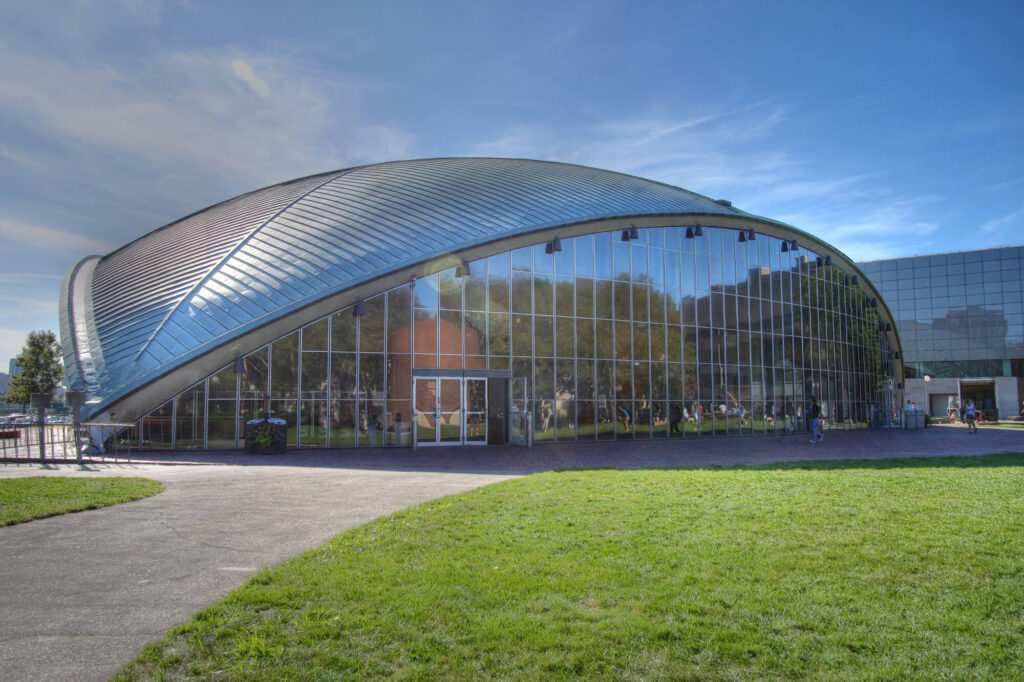
Dedicated in 1955 to serve as “the meeting house” of MIT, Kresge is home to the largest auditorium on campus. Designed by Eero Saarinen, the building draws visitors from around the world.
- Main Kresge Auditorium (W16-109). Seating: 1,069. Suitable for concerts, lectures, conferences, cultural shows, and major events. Two projection screens (mid-stage and upstage) and a self-help AV system supports one wired mic and/or laptop; advanced lighting/AV requires an authorized CAC vendor. No food or drink.
- Kresge Lobby (W16-100LA). Reception or registration space outside Main Kresge. Alcohol service allowed with CAC coordination; must be used in conjunction with Main Kresge.
- Little Theatre (W16-035). Seating: 150 fixed, plus balcony for 8 accessible seats or up to 25 chairs. Suitable for theatrical or musical performances, lectures, and conferences. Includes upstage projection screen; theatrical lighting, and AV must be operated by CAC-authorized technicians. No food or drink.
- Rehearsal Rooms A (W16-033) and B (W16-030). Windowless rooms for classes, rehearsals, workshops, or small meetings. Each has a sprung hardwood floor, sound-absorbing walls/ceiling, variable lighting, whiteboard, motorized projection screen, portable sound system, and Smart TV. May serve as support spaces for Main Kresge or Little Theatre events.
- Dressing Rooms (W16-010; W16-021). Available for performers and speakers at Kresge events.
Stratton Student Center (W20)
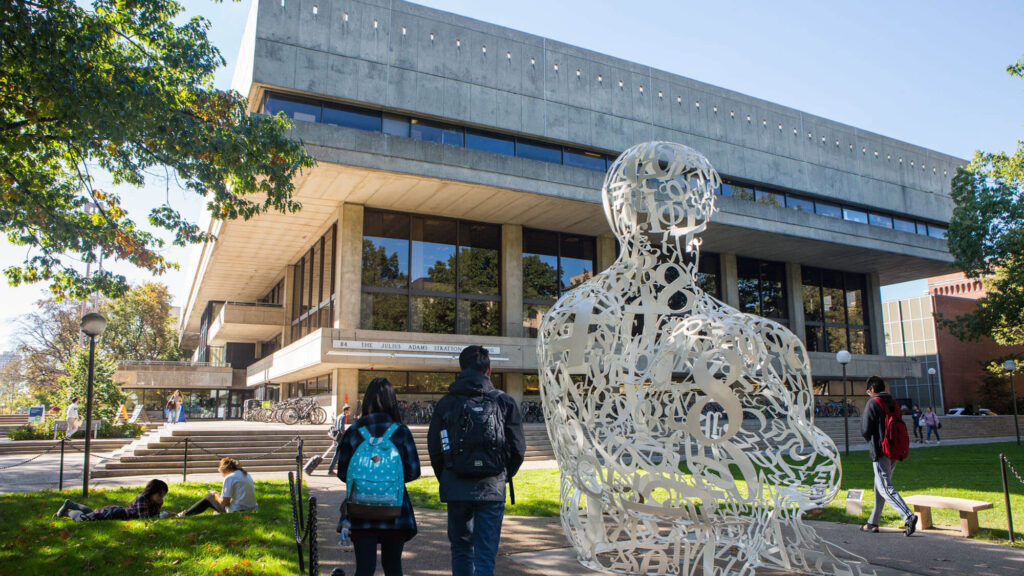
The vibrant heart of MIT’s campus life, the Stratton Student Center is a hub for student activities, dining, study, and collaboration. It is home to most student-led organizations and many community-building activities, and it houses a range of student support offices. Designed by MIT architecture professor Eduardo Catalano and named for the Institute’s eleventh president, Julius Stratton, the Brutalist-style concrete structure opened in 1968.
- Basement Meeting Room (W20-027). Small conference room for meetings of up to 8, arranged in two groups of 4.
- Dance Studios (W20-407 & W20-491). Studios dedicated to dance rehearsals and workshops. Each has a wooden floor, mirrored walls, and a carpeted entry with coat hooks and cubbies. Self-help sound system provided. Only dance and similar movement activities permitted. No furniture, food, or beverages allowed.
- Lobdell Dining Hall (W20-208). Available after 6:00 p.m. on weekdays and on weekends for parties, banquets, and movies. Equipped with a sound system and projector. Reset required after use.
- Multipurpose Room (W20-401). Tile floor with rolling furniture. Suitable for lectures and panels. Food allowed; no alcohol. Features a large TV and a sound system.
- Private Dining Rooms #1 (W20-301) and #2 (W20-302). Small meeting and gathering spaces that can be combined for larger groups; PDR 2 features a large TV, whiteboard, and AV for live videoconferencing.
- Private Dining Room #3 (W20-303). Boardroom setup seating 18, featuring a large TV, whiteboard, and AV for live videoconferencing.
- Sala de Puerto Rico (W20-202). This multipurpose room is often used for dances, career fairs, cultural events, and limited theatrical productions. Features laminate flooring and an overhead pipe grid for lighting and banners.
- Twenty Chimneys (W20-306) and Mezzanine Lounge (W20-307). Carpeted rooms for meetings, banquets, and lectures; no dancing. Each space features a large TV, sound system, and AV for live videoconferencing.
- West Lounge (W20-201). Adjacent to Sala de Puerto Rico; supports larger events or can be used separately for meetings, receptions, and rehearsals.
Ray and Maria Stata Center (Building 32)
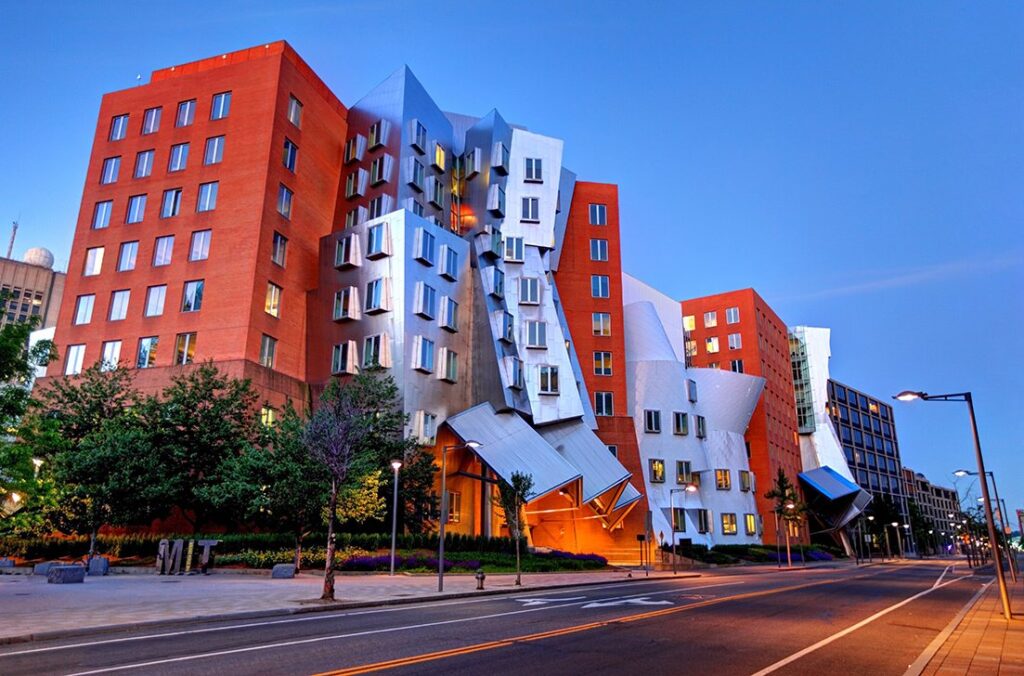
Designed by Frank Gehry, the Stata Center is an architectural icon that houses an enormous range of academic units, research labs, and gathering spaces. Home to the Computer Science and Artificial Intelligence Lab (MIT’s largest), the Department of Linguistics and Philosophy, and the Charles Vest “student street” featuring display boards, student activity booths, and café seating, Stata is a busy hub of community interaction.
- Dertouzos Amphitheater (outdoors): Open-air venue for student activities; seats 350. Amplified equipment and music are not allowed.
- Forbes Café: Gathering space for informal events and receptions; alcohol permitted on weekends during the academic year.
- TSMC Lobby: Event and registration space adjacent to classrooms; must follow CAC guidelines.
- Vest Student Street: Student activity hub outside classrooms with display boards and café seating; suitable for tabling and small gatherings.
Walker Memorial (Building 50)
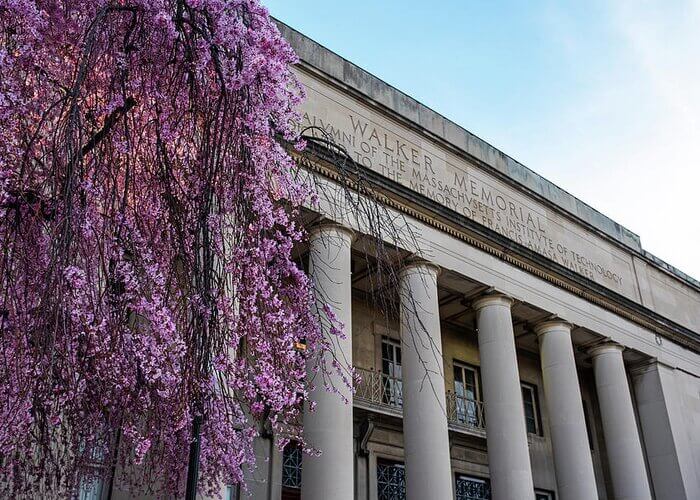
Built in 1916 when MIT first moved to Cambridge from Back Bay in Boston, Building 50 was the Institute’s first student center and is named in honor of Francis A. Walker, MIT’s third president. Architect Welles Bosworth (class of 1889) modeled the design after nineteenth-century gentlemen’s clubs, complete with social rooms, meeting rooms, offices, athletic facilities, and dining rooms. Murals by Edwin Howard Blashfield (class of 1869) grace the walls of Morss Hall; Blashfield’s work can also be seen at the Library of Congress, the Detroit Public Library, and various state buildings across the country.
- Climbing Wall: Indoor climbing facility for recreational and athletic use.
- Dance Rehearsal Room: Room equipped for dance practice and rehearsal activities.
- Morss Hall: Large banquet facility with patios, suitable for breakfasts, lunches, dances, receptions, and cultural shows. AV must be rented and set up separately. Metal detectors are not permitted due to multiple entry and exit points.
- Muddy Charles Pub: Campus pub space for gatherings and social events.
- Rainbow Lounge: Social and meeting space for student groups and MIT events.
MIT Chapel (W15)
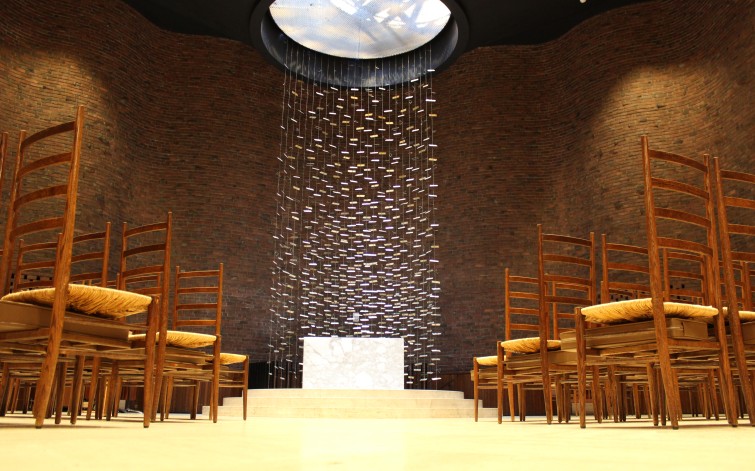
Designed by architect Eero Saarinen and completed in 1955, the MIT Chapel is a non-denominational sacred space located next to Kresge Auditorium and the Kresge Oval. It accommodates religious services, personal ceremonies, and meditation, providing a quiet environment for reflection and celebration. Public visiting hours are Mon–Fri, 10–11 a.m. and 1:30–2:30 p.m. The MIT Chapel is available for weddings, memorials, baptisms, bar/bat mitzvahs, sorority/fraternity initiation ceremonies, and other religious or ceremonial events. Non-religious events considered on a case-by-case basis.
- Seating: Seats 114; folding chairs can increase capacity to 140.
- Organ: Use permitted only by experienced MIT organists with CAC approval.
- Accessibility: Open for private meditation when unscheduled.
Wong Auditorium (E51-115)

Wong Auditorium is a versatile venue for conferences, lectures, symposia, workshops, and receptions. The auditorium features a self-help AV system, and additional audio/visual services are available through MIT AV Services.
- Capacity: Seats 289.
- Ting Foyer: Space outside Wong Auditorium can be used for registration, tabling, poster boards, and receptions; must be used in conjunction with the auditorium.
- Wolk Lobby: First-floor entranceway, available for use in conjunction with auditorium events.
Memorial Lobby/Lobby 10 (Building 10)
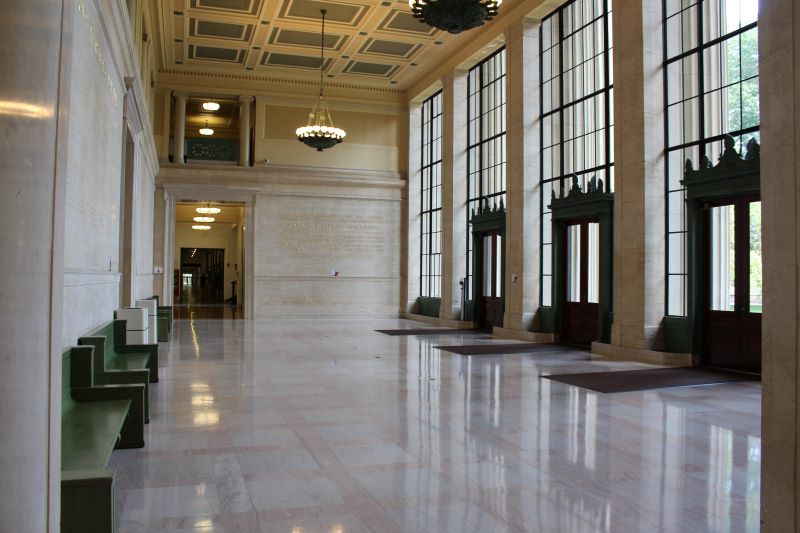
Memorial Lobby in Building 10 (Lobby 10) is a War Memorial commemorating MIT alumni veterans. Lobby 10 is on the Infinite Corridor, directly beneath MIT’s great dome, and is a high-traffic campus space for promotion—while maintaining the sanctity of the memorial. Strict policies govern its use, including no hanging banners, no amplified sound, and maintaining clear pathways.
- Booths are available for reservation weekdays from 9:00 a.m. to 5:00 p.m. during the academic year. Strict policies apply: no hanging banners, no amplified sound, and clear pathways must be maintained. Limited evening and weekend availability. Equipment inventory is limited.
Religious Activities Center (W11)
W11’s event spaces are primarily used to support activities in the Office of Religious, Spiritual, and Ethical Life (ORSEL). Student organizations can request these spaces for meetings, informal gatherings, and banquet-style setups on a limited basis after core religious needs are met.
- Community Room: Lounge-style seating for up to 20; table seating for 12.
- Main Dining Room: Banquet seating for 48, plus two side tables; can be combined with the small dining room.
- Small Dining Room: Boardroom-style seating for 16; connects to main dining room for larger events.
Lobby 13 (Building 13)
When using the lobby for an event, please be considerate of the nearby classroom and keep noise levels to a minimum. Furniture setups and support services for Lobby 13 are provided by CAC. If your event requires more than a few tables and chairs, you will need to make arrangements with a CAC manager to rent furniture. If setting up in the center, you will need a four foot aisle around the perimeter of the room.
Please note: during the winter months and in the evenings, Lobby 13 can get very cold.
- Entrance lobby with polished marble floor and standing-room reception capacity of 250; seated capacity, 90 with tables and chairs. The space must be maintained as an open passageway for the public—access to the doors, elevators, and stairways cannot be blocked or restricted in any way.
Outdoor Spaces
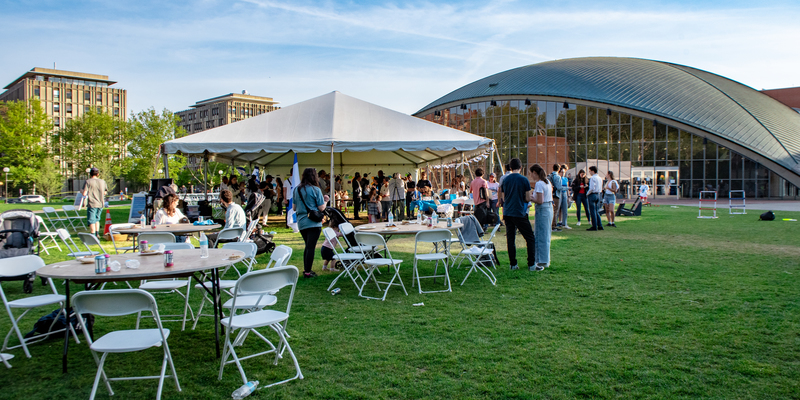
The CAC offers a variety of versatile outdoor spaces designed for community gatherings. Students can find ideal spots for studying, socializing, or organized events that provide essential fresh-air retreats throughout MIT’s urban campus.
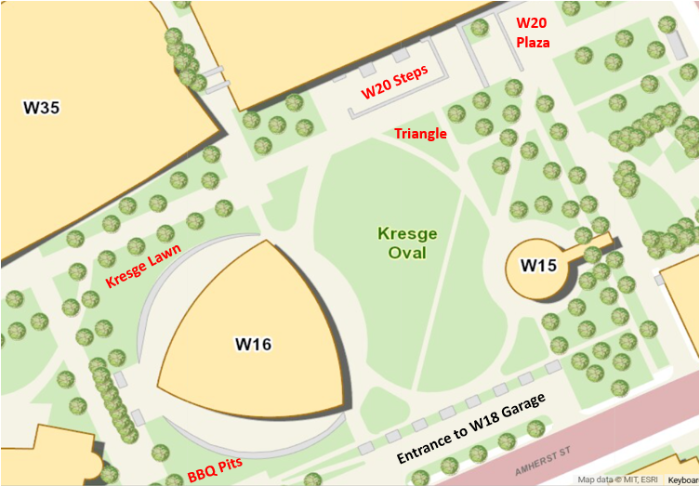
- Kresge Barbeque Pits: The barbecue pits are located between Kresge Auditorium (W16) and Amherst Street. The pits accommodate approximately 50 people and include two charcoal grills (no gas) and two picnic tables. CAC can provide up to four additional tables for food preparation. Groups must bring their own grilling supplies, including charcoal and a lighter. At the conclusion of use, hot coals must be extinguished using the hose at the pits, and ashes placed in the metal trash can provided; all bagged trash must be placed in the dumpster behind Kresge. The pits are open April 1 through November 1. An MIT Police detail is required if alcohol is served. For safety information, please consult the EHS Barbecue Safety Guidelines.
- Kresge Kresge Oval, Kresge Lawn, and Stratton Student Center Plaza: These spaces are available on a limited basis through CAC for pre-approved events only. Stratton Student Center Plaza and the surrounding lawn areas (Kresge Oval and Kresge Lawn) can be reserved separately or together for large outdoor events. Electrical outlets are available for sound systems; check with CAC to confirm whether outlets meet event power needs.
- Dertouzos Amphitheater: Located just outside the Stata Center, the amphitheater accommodates up to 350 people. This outdoor venue is suitable for performances, lectures, and special events. Sound amplification and staging may be permitted with advance approval from CAC.
- Student Center Steps: The elevated area at the front of the Stratton Student Center provides a visible stage-like platform for rallies, performances, and announcements. Events held here must ensure safe access in and out of the Student Center and maintain clear pathways on the steps.
- Walker Lawn and McDermott Court: These outdoor areas are suitable for barbecues, celebrations, and other special events. Walker Lawn is the green space between Walker Memorial and Hayden Library. McDermott Court, also called “the Dot,” is located between Walker Memorial and the Green Building.
Event Space Hours
Indoor Spaces
- Sunday to Thursday, 7:00 a.m.–11:00 p.m.
- Friday to Saturday, 7:00 a.m.–1:00 a.m.
- All exceptions require prior approval
Outdoor Spaces
- Sunday to Saturday, 7:00 a.m.–11:00 p.m.
- All exceptions require prior approval
Event Space Capacities
Major Event Spaces (Capacity for 150+)
| Space Name | Location |
|---|---|
| Lobdell Dining Hall | W20-208 |
| Kresge (Little Theater) | W16-035 |
| Kresge (Main) | W16-109 |
| Morss Hall | 50-140 |
| Sala De Puerto Rico | W20-202 |
| Wong Auditorium | E51-115 |
Mid-level Event Spaces (Capacity 32-150)
| Space Name | Location |
|---|---|
| Forbes Family Café | 32-162 |
| Main Dining Room | W11-190 |
| Memorial Lobby | Building 10 |
| Mezzanine Lounge | W20-307 |
| Private Dining Room #1-2 | W20-301/302 |
| Rehearsal Room A | W16-033 |
| Rehearsal Room B | W16-030 |
| Room 407 | W20-407 |
| Room 491 | W20-491 |
| Stata (Charles Vest) Student Street | 32-1st Floor |
| TSMC Lobby | 32-100LC |
| Twenty Chimneys | W20-306 |
| West Lounge | W20-201 |
Small Event Spaces (Capacity 8-32)
| Space Name | Location |
|---|---|
| Basement Conference Room | W20-027 |
| Community Room | W11-155 |
| Private Dining Room #1 | W20-301 |
| Private Dining Room #2 | W20-302 |
| Private Dining Room #3 | W20-303 |
| Small Dining Room | W11-180 |
Contact the CAC
The CAC is dedicated to helping groups and individuals across the MIT community create and implement their event vision.
Monday – Friday, 9 a.m. to 5 p.m. For after-hours and weekend event needs and building emergencies, please call (617) 253-1500 and ask for the CAC manager on duty.